
Demolition at Castlepoint, Bournemouth
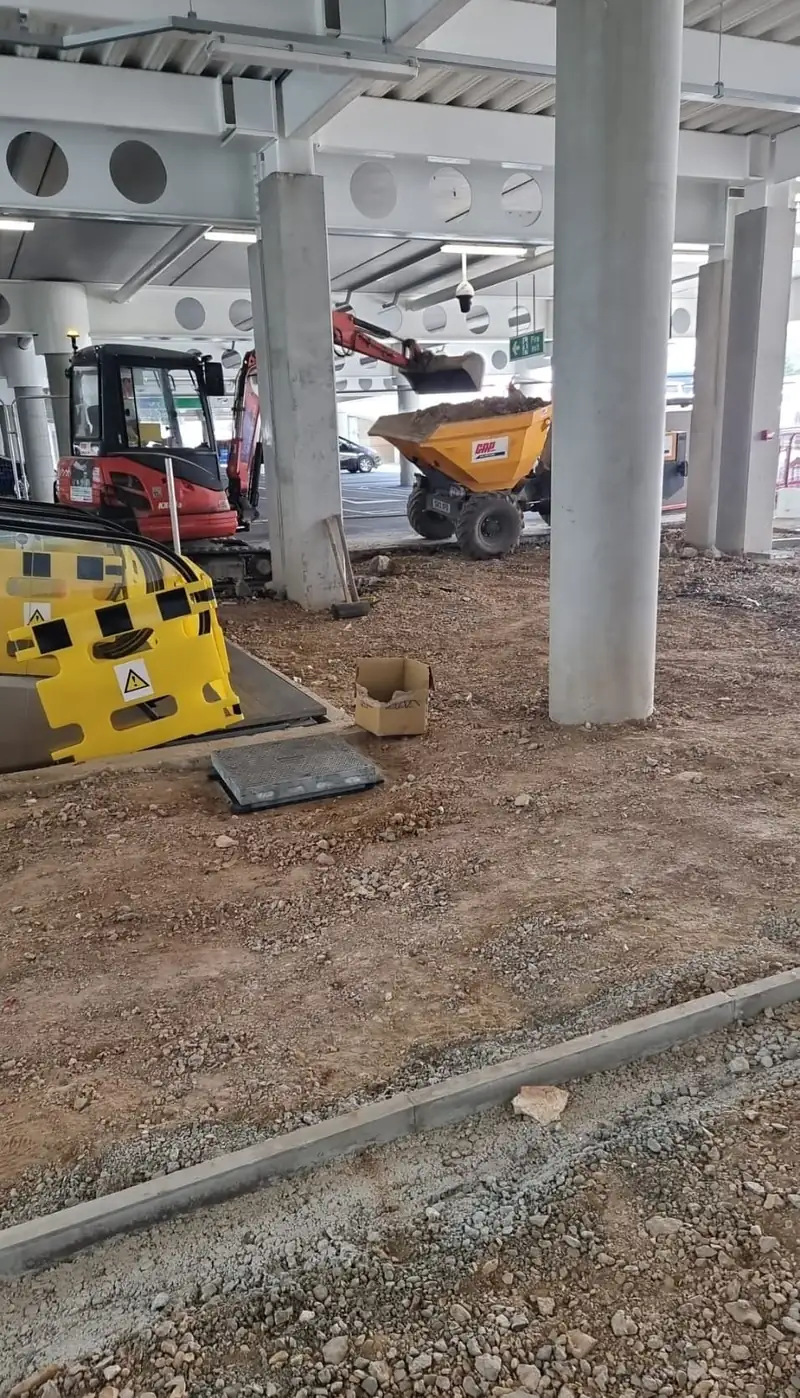
Our work on the £7 million remodel of Castlepoint Shopping Centre began with demolition, carefully dismantling existing structures to make way for the new development.
It was a busy retail site, so the work was planned around the people using it, with protected walkways keeping shoppers clear of the work areas.
What we clear and demolish
- Existing structures, from garages and outbuildings to parts of commercial buildings
- Old slabs, hardstandings and tarmac, broken out and removed
- Old foundations, drains and chambers found below ground, once services are disconnected
- Overgrown and derelict plots, cleared of vegetation, rubble and debris
- Spoil and waste, loaded and taken away by licensed carriers
- Levels, with the site graded and reduced to formation, ready for the next stage
Before demolition starts
A demolition job starts with paperwork and surveys. The main checks are:
- Asbestos. A building put up before 2000 needs a refurbishment and demolition asbestos survey. Any asbestos it finds has to be dealt with before demolition, by a licensed contractor where the law requires it.
- Notice to the council. Most demolitions need a notice to the council at least six weeks before work starts, under the Building Act 1984. Small buildings of 50 cubic metres or less are exempt. That’s BCP Council in Bournemouth, Christchurch and Poole, and Dorset Council elsewhere in the county.
- Planning. Some demolitions also need the council’s prior approval or planning permission, particularly houses and buildings in conservation areas. Listed buildings need listed building consent.
- Services. Gas, electricity, water and telecoms supplies have to be disconnected by the utility companies first.
- Wildlife. Old buildings and overgrown plots may need checking for bats and nesting birds, which are protected by law.
- A written plan. Under the CDM Regulations 2015, the arrangements for demolition have to be planned and set out in writing before work starts.
From clearance straight into groundworks
Because we’re a groundworks contractor, clearing the site is the first stage of a job we carry on with, not a separate trade to hand over. The same team moves on to excavation, foundations, drainage and services, so there’s no gap in the programme between demolition and building.
It also means anything found during clearance, such as old foundations, drains or soft ground, is dealt with by the people who will dig the foundations, and allowed for straight away.
Waste and recycling
Clearing a site produces a lot of material. Waste is taken away by licensed carriers with the transfer paperwork to show where it went, and concrete, brick, metal and timber are kept separate wherever possible so they can be recycled.

Excavation and muck away
Once the site is clear, our excavation crews dig to the levels and depths the engineer specifies for foundations, drainage and services.
Excavators, dumpers and muck-away lorries keep the spoil moving, so the site stays workable and the programme keeps to time.
Proudly Partnering With


Demolition and site clearance questions
Do I need permission to demolish a building?
Usually you need to give the council at least six weeks’ notice under the Building Act 1984, unless the building is 50 cubic metres or smaller. Houses, buildings in conservation areas and listed buildings can also need prior approval, planning permission or listed building consent, so check with BCP Council or Dorset Council early.
Do I need an asbestos survey before demolition?
If the building was put up before 2000, yes. It needs a refurbishment and demolition asbestos survey, and any asbestos found must be dealt with before demolition starts.
Can you clear part of a site while the rest stays in use?
Yes. At Castlepoint we worked on a shopping centre that stayed busy with shoppers. We plan the phasing, access and protection so the parts of the site in use stay safe.
Do you carry on with the groundworks afterwards?
Yes, and that’s where we’re most useful. After clearance we can take on the excavation, foundations, deep drainage and surfacing, so one contractor takes the site from clearance to finished ground.
Which areas do you cover?
We’re based in Poole and work in Bournemouth, Christchurch and across Dorset, and into Hampshire and Wiltshire.